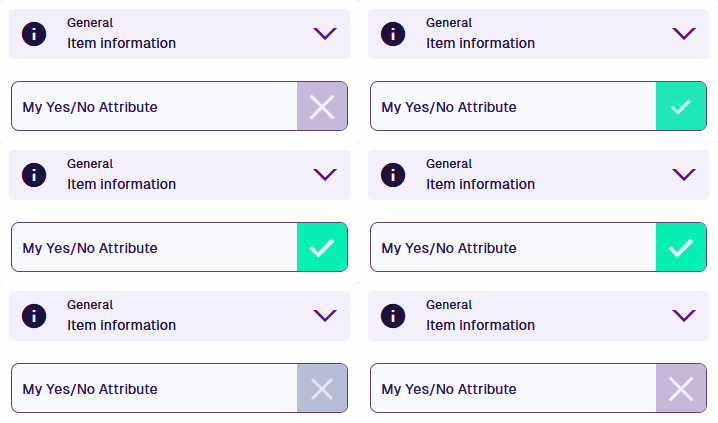
Yes/No attribute
Store a boolean value
A Yes/No value can store a single boolean with a value of true or false.
Configuration
When adding or editing a Yes/No attribute on a design/interface, you can configure the following properties. These determine how the attribute will behave when users populate its value on corresponding items.
- Code (read-only) - the attribute's Global Unique Code (Guc) identifier.
- Name * - enter a distinct name that clearly identifies the attribute.
- Description - describe what the attribute represents and how it's intended to be used. This helps users and AI agents to understand its purpose.
- Required - if enabled, the attribute must be populated before an item can be saved. It can't be left blank!
- Read-only - if enabled, the attribute can only be populated when creating items. It can't be edited afterwards!
- Unique - if enabled, the attribute only accepts values that aren't already stored in other items of the design/interface.
- Default value - the attribute is automatically populated with this value. It can usually be changed before saving, unless the attribute is also Read-only or excluded from an item form.
-
Tags - use the Tag Manager to assign custom tags or a relevant system tag.
Available system tags
-
RequiredOnTaskStatus[Completed/Cancelled] - only relevant if the design/interface implements the Tasks interface. The attribute becomes required when a task's status changes to Completed or Cancelled.
-
ActionParameter[Dynamic] - for internal use only. Marks the attribute as a configurable parameter on a workflow action.
-
- AQS agent enabled - if disabled, the attribute is excluded from AI agent queries.
Populate the attribute on items
When creating or editing an item, select the attribute to toggle between its true and false states.