Geometry attribute
Store location and geometry coordinates
A Geometry attribute can store geometry coordinates in GeoJSON format.
While all designs/interfaces inherit a standard Geometry attribute via the Items interface, you can add additional Geometry attributes to hold other location information.
To configure the standard Geometry attribute, see Editing design general details.
Configuration
When adding or editing a Geometry attribute on a design/interface, you can configure the following properties:
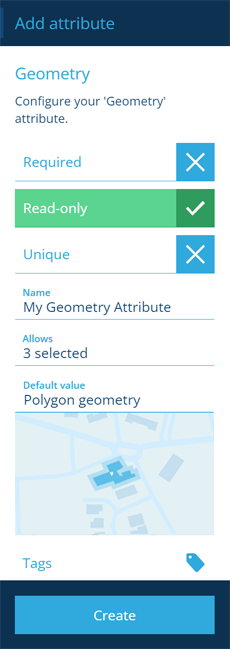
- Name * - enter a distinct name that clearly identifies the attribute.
- Code (read-only) - the attribute's Global Unique Code (Guc) identifier.
- Required - if enabled, the attribute must be populated before an item can be saved. It can't be left blank!
- Read-only - if enabled, the attribute can only be populated when creating items. It can't be edited afterwards!
- Unique - if enabled, the attribute only accepts values that aren't already stored in other items of the design/interface.
-
Allows - the attribute will only accept the selected geometry types.
-
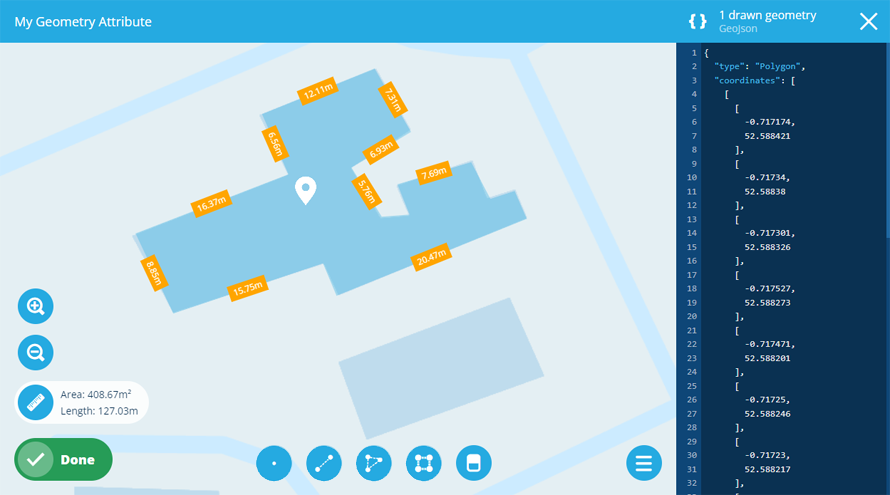
Default value - use the Geometry Editor to draw some geometry. The attribute will automatically be populated with these coordinates, unless another value is entered.
-
Tags - use the Tag Manager to assign custom tags or a relevant system tag.
Available system tags
Treat the attribute as:
- GeometryTrail - a line of points that may be extended over time, rather than a fixed line, e.g. tracking location history in the Vehicles module. The tag doesn't do this automatically. It can be done via a workflow, import, or similar.
-
RequiredOnTaskStatus[Completed/Cancelled] - only relevant if the design/interface implements the Tasks interface. The attribute becomes required when a task's status changes to Completed or Cancelled.
-
ActionParameter[Dynamic] - for internal use only. Marks the attribute as a configurable parameter on a workflow action.
Populate the attribute on items
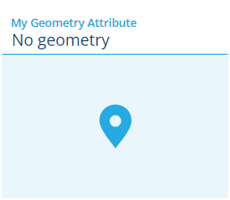
When creating or editing an item, select the attribute to draw the desired geometry with the Geometry Editor (or paste in existing GeoJSON coordinates).
To populate the standard Geometry attribute, see Editing item geometry.